
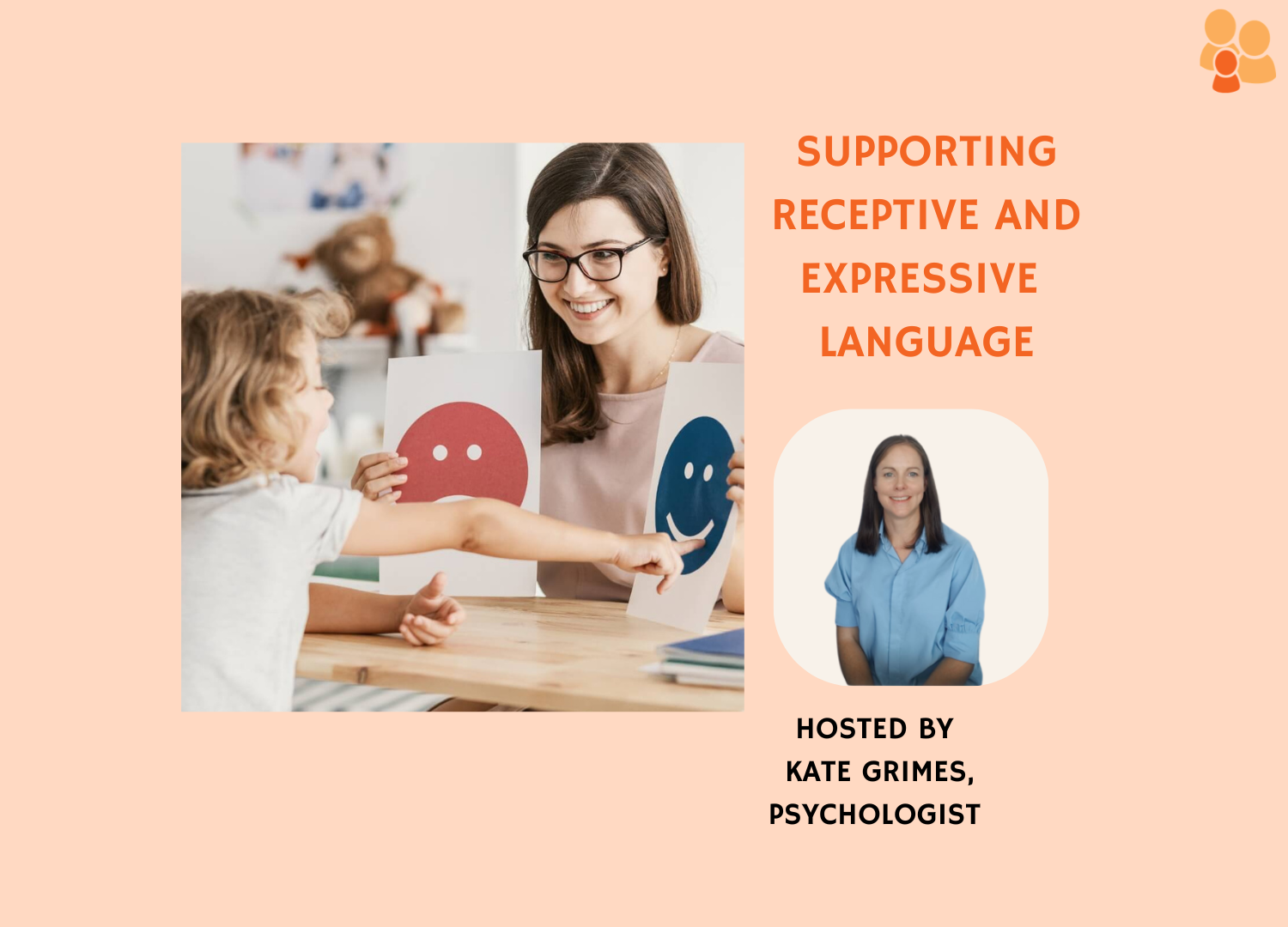
Kate Grimes, Psychologist at Inspire Therapy, will guide you through strategies to help build your child’s receptive, expressive and social interactions.
In this session we will look at content across the following areas:
- Language development- how children learn to understand and use spoken language over time. It includes both receptive language (what they understand) and expressive language (what they can say), and delays can impact learning, behaviour, and social interaction.
- Modeling and recasting- how adults can demonstrate accurate and natural language during interaction without expecting the child to repeat it. –Recasting involves repeating what a child has said but corrects or extends it, helping them hear the correct structure in context. –
- Setting up the environment for success- A well-structured environment reduces cognitive load and supports children to understand expectations more easily. This includes clear routines, visual supports, organised spaces, and predictable systems that promote independence and communication.
- Play skills- Play is a key driver of language development as it provides meaningful opportunities for communication, imagination, and social interaction. Developing play skills helps children progress from simple exploration to more complex symbolic and cooperative play with peers.
- Using gesture and visuals to support comprehension- Gestures and visuals help children process and retain spoken language by giving them additional cues for meaning. This is especially important for children who struggle with auditory processing, attention, or language delay, as it increases access to learning.
- When to refer- Referral should be considered when a child shows limited progress despite targeted support or significant difficulties with understanding or using language. It is also appropriate when communication needs are impacting learning, behaviour, or social development and further specialist input is required.
Matilda –
You really make it seem really easy with your presentation however I in finding this matter
to be really one thing which I believe I would never understand.
It seems too complex and very wide for me. I’m
looking forward on your subsequent put up, I’ll try to get the
hold of it!